Looking for the latest information on Euclids Elements Proposition 2? We've researched comprehensive data, records, and insights about Euclids Elements Proposition 2.
Main Features
Explore the main sources for Euclids Elements Proposition 2.
Recent Updates
Stay updated on Euclids Elements Proposition 2's newest achievements.
Euclid's Elements Book 1: Proposition 8, Side Side Side Theorem 2
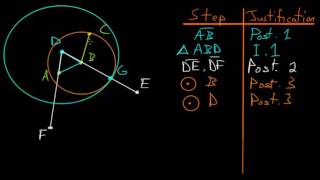
Demonstration of Euclid's Proposition 2
Euclid's Elements Book 1 - Proposition 2 - Draw a straight line equal to another.
Euclid’s Elements Book 1 Proposition 2
Euclid's Elements - Book 1, Proposition 2
Euclid's Elements, Book X, Proposition 2 (X.2)
Euclid's Elements Book 5 - Proposition 2
Euclid’s Elements Book 1 Proposition 2
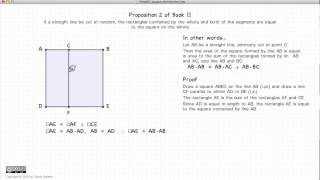
Euclid's Elements Book 2 - Proposition 2
Euclid’s Elements — Book I, Proposition 2
Euclid's Elements Book 1: Proposition 12, Constructing A Perpendicular Line 2
Deep Dive
Data is compiled from public records and verified media reports.
Last Updated: October 26, 2026
Summary
For 2026, Euclids Elements Proposition 2 remains one of the most searched-for information profiles. Check back for the newest reports.
Disclaimer: Disclaimer: All information is compiled from publicly available data, media reports, and analysis. Actual details may vary.
Summary
my new website: EulersAcademy.org This is the second With any given straight line and any random point we can always make a line equal to the given line on the given point. Support ... How to copy a line segment to a specified point. A step by step board presentation of We demonstrate that given a point and a line segment that there exists a subdivision of a line segment containing the given point ... From a given point draw a straight line equal to a given straight line. Using only the tools that To place a straight-line equal to a given straight-line at a given point. patreon.com/Mathoma Heath's translation of If A = nC, B = mC and D = nC, E=mC, then A+B = kC and D+E = kC. To place at a given point a straight line equal to a given straight line. The square of a line is equal to the sum of the rectangles contained by the original line, and the individual line segments.