Looking for the latest information on Privacy Underground Computerphile? We've researched comprehensive data, records, and insights about Privacy Underground Computerphile.
Main Features
Explore the primary sources for Privacy Underground Computerphile.
History
Stay updated on Privacy Underground Computerphile's latest milestones.
Differential Privacy - Simply Explained
Almost All Web Encryption Works Like This (SP Networks) - Computerphile
Oblivious Transfer - Computerphile
TOR Hidden Services - Computerphile
Secure Web Browsing - Computerphile
WiFi's Hidden ____ Problem - Computerphile
Public Key Cryptography - Computerphile
The Anonymisation Problem - Computerphile
GPS Hidden Messages - Computerphile
Secrets of the Deep Dark Web (Deep Dark Web Pt2) - Computerphile
Zero Knowledge Proofs - Computerphile
Expert Insights
Data is compiled from public records and verified media reports.
Last Updated: October 26, 2026
Final Thoughts
For 2026, Privacy Underground Computerphile remains one of the most searched-for information profiles. Check back for the latest updates.
Disclaimer: Disclaimer: All information is compiled from publicly available data, media reports, and analysis. Actual details may vary.
Summary
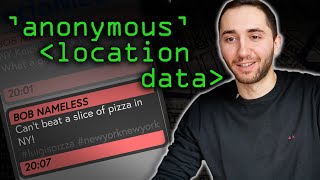
With data leaks becoming common, people are concerned about protecting their own How many times have you been asked to share 'anonymous' location data? Andrea shows just how simple it can be to work out ... With nefarious big tech companies wanting all your data, could Web 3.0 be the answer? Discussing with Professor Derek ... Companies are collecting more and more data about us and that can cause harm. With differential Substitution-permutation networks are the basis for almost all modern symmetric cryptography. Dr Mike Pound explains. Share part of a secret without knowing which part? Dr Tim Muller explains how Oblivious Transfer works. The Dark web allows users to hide services using TOR, but how? Dr Mike Pound explains. Onion Routing: ... Websites & https what difference does the "s" make anyway? - Dr Richard Mortier of the University of Cambridge Computer ... We've all got to the edge of the wifi coverage, but the idea of coverage produces a network problem, the Hidden Node Problem. Spies used to meet in the park to exchange code words, now things have moved on - Robert Miles explains the principle of ... Keeping data anonymous seems easy, but keeping identities separate is a big problem. Professor Derek McAuley explains. Something odd was going on with the signals broadcast by the GPS satellites. Steven Murdoch of University College London ... Deep and Dark web are often getting confused - Dr Max Wilson untangles the difference. Web vs Internet (Deep Dark Web pt1): ... How do you prove something without giving away all your data? Zero Knowledge Proofs could hold the answer. Alberto Sonnino ...