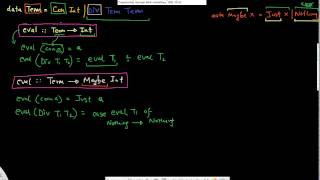
Looking for the latest information on Haskell Monad Part 1 Of 4? We've researched comprehensive data, records, and insights about Haskell Monad Part 1 Of 4.
Core Information
Explore the primary sources for Haskell Monad Part 1 Of 4.
Recent Updates
Stay updated on Haskell Monad Part 1 Of 4's latest milestones.
Haskell StateMonad Part (1 of 4)
Haskell Monad Transformers: Simple Monad Transformer Part (1 of 2)
Haskell Monad: Part 2 of 4.
Haskell Study Group: Monads (Part I)
Haskell: Monads. A 5-minute introduction
Haskell, List Monad, Part1 of 2
Haskell Monad: Part 3 of 4.
Haskell, Maybe Monad, Part1 of 2
Haskell Monad: Part 4 of 4.
Haskell Proves What Monads Actually Are (Category Theory Explained)
AFP 7 - Monads I: Basic Concepts
Full Guide
Data is compiled from public records and verified media reports.
Last Updated: October 27, 2026
Conclusion
For 2026, Haskell Monad Part 1 Of 4 remains one of the most searched-for information profiles. Check back for the latest updates.
Disclaimer: Disclaimer: All information is compiled from publicly available data, media reports, and analysis. Actual details may vary.
Summary
Intuition between the bind operator in Okay and um again just trying to figure out the kinds So in this video we're going to look at the list Hey guys. In this video, I am explaining You may want to watch my video on Guys so in this video we're going to look at they're going to look at Studying the formal definition of the In today's discussion, we will be discussing Setting up a problem using a simple evaluator and later in Part4 solving it using the bind operator of the type constructor Maybe. Using the problem from part3 of a simple evaluator and solving it using the bind operator of the type constructor Maybe.