Looking for the latest information on Gaussian Filter Explained Simply? We've researched comprehensive data, records, and insights about Gaussian Filter Explained Simply.
Key Details
Explore the primary sources for Gaussian Filter Explained Simply.
Developments
Stay updated on Gaussian Filter Explained Simply's latest milestones.
Difference of Gaussian Filter - In-depth intuition with MATLAB Implementation
Gaussian Filter in Surface Texture Measurement - Digital Metrology Notepad Series
Gaussian Blur & Fourier Transform in Image Processing (Spatial vs Frequency Domain Explained)
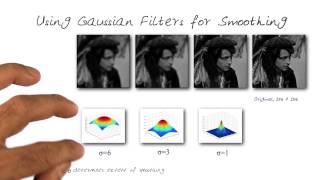
Using Gaussian Filters for Smoothing Cont
96 - What is Gaussian Denoising Filter
Difference of Gaussians filtering
شرح Gaussian Filter || ماتلاب كورس عملي
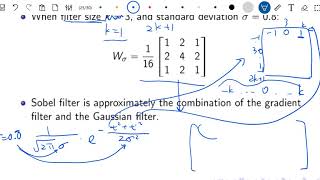
CS540 Lecture 7 Gaussian Filter Approximation Example
Which is better filter for Gaussian noise | Gaussian Filter | Bilateral Filter | ComputerVision Blur
The Generalized Gaussian Filter (Used in KF, EKF, and UKF)
The Kalman Filter Derived: The Power of Gaussians
Expert Insights
Data is compiled from public records and verified media reports.
Last Updated: October 26, 2026
Summary
For 2026, Gaussian Filter Explained Simply remains one of the most talked-about information profiles. Check back for the latest updates.
Disclaimer: Disclaimer: All information is compiled from publicly available data, media reports, and analysis. Actual details may vary.
Summary
This video is part of the Udacity course "Computational Photography". Watch the full course at ... Do you (really) know the difference between surface roughness and waviness? If we want to understand and describe surface ... Get FREE Robotics & AI Resources (Guide, Textbooks, Courses, Resume Template, Code & Discounts) – Sign up via the pop-up ... In imaging science, difference of Gaussians (DoG) is a feature enhancement algorithm that involves the subtraction of one ... Noise is an unfortunate result of data acquisition and it comes in many forms and from many sources. For scientific images (e.g. ... This video shows what happens when you subtract one blurry image from the same image with a different level of blur, ... The question here is how do I get this approximation and the first thing is there's a typo here so K here should be one the In this video, we derive the Kalman