Looking for the latest information on Functional Programming Curry Utility? We've compiled comprehensive data, records, and insights about Functional Programming Curry Utility.
Key Details
Explore the main sources for Functional Programming Curry Utility.
History
Stay updated on Functional Programming Curry Utility's latest milestones.
Functional Programming: Example - curry, compose and pipe
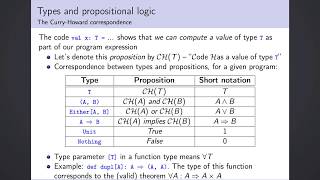
Functional programming, chapter 3. The logic of types, part 3: The Curry-Howard correspondence
Functional Programming - 06: Function Currying demo
Functional Programming: Currying
How to Curry Functions | An Advanced Javascript Tutorial on Currying
Stefanie Schirmer: Functional programming and curry cooking in JS | JSConf EU 2015
[BYOPL:L7e] Functional programming: Implementing the curry() function
Functional programming, addendum to chapter 3: The curryhoward library
Summary for: Functional programming, chapter3; addenda 1 and 2
Expert Insights
Data is compiled from public records and verified media reports.
Last Updated: October 26, 2026
Final Thoughts
For 2026, Functional Programming Curry Utility remains one of the most searched-for information profiles. Check back for the newest reports.
Disclaimer: Disclaimer: All information is compiled from publicly available data, media reports, and analysis. Actual details may vary.
Summary
It's all about the input. You can't always give all a Function Currying (Partial Application) in In this video, we learn to refactor a simple use case to use Web Dev Roadmap for Beginners (Free!): bit.ly/DaveGrayWebDevRoadmap Learn how to Are you interested in learning about BYOPL course playlist: youtube.com/playlist?list=PLIgSR01UTt8OHY8WhAqOmr8EzArJYd5Z0 We implement the ... Solving Day 10 of the Leetcode 30-day This presentation was recorded at GOTO Copenhagen 2024. gotocph.com Russ Olsen - Author of ... This Addendum to Chapter 3 presents an open-source library "curryhoward" that implements some functions automatically in ... This short summary gives an overview of the material presented in detail in the corresponding chapter of the